
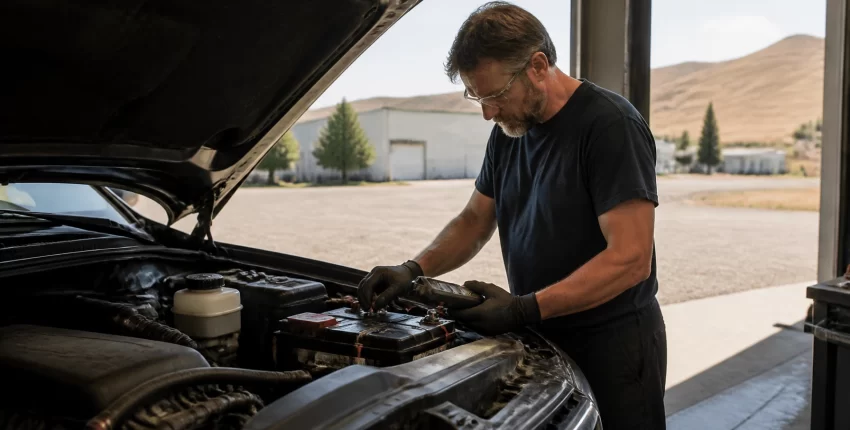
Most drivers think winter is what kills a car battery. In reality, summer heat often does the lasting damage, while freezing temperatures simply reveal how weak the battery has become.
That makes August and September smart months for battery maintenance in Havre, MT. Before the first cold snap arrives, you still have time to identify a tired battery, check the charging system, and replace a weak component before it leaves you stranded in a cold parking lot or at home on a busy morning.
At Nate’s Gona Fix It, we help local drivers prepare for Montana’s demanding weather with practical, honest vehicle maintenance. A professional battery load test is a quick way to learn whether your vehicle is ready for the months ahead.
Why Summer Heat Can Damage Your Battery
Your battery contains chemical compounds that create the electrical power needed to start the engine. Heat speeds up those chemical reactions. That may sound helpful, but the faster reactions also accelerate internal wear.
High under-hood temperatures can contribute to:
- Corrosion inside the battery
- Loss of electrolyte in some battery designs
- Damage to the battery plates
- Reduced reserve capacity
- Shorter overall battery life
Think of it like leaving a tool outside in harsh weather. It may still work today, but repeated exposure gradually weakens it. A battery can appear normal after a hot summer while losing the strength it needs for a reliable cold start.
AAA notes that high temperatures can significantly reduce battery longevity, and battery testing specialists at Midtronics also identify heat as a major cause of premature battery failure. You can read more about the effects of heat in AAA’s guide to preventing car battery heat damage and Midtronics’ battery life information.
Winter Usually Reveals the Problem
Cold weather still makes starting your vehicle more difficult. When temperatures drop, the engine oil becomes thicker and the battery’s chemical activity slows. At the same time, the engine needs more effort from the starter to turn over.
A healthy battery can usually handle that extra demand. A battery weakened by summer heat may not.
That is why a battery may start your car without trouble in July but fail during the first hard freeze in Havre. The cold did not necessarily cause the original damage. It exposed a battery that was already near the end of its useful life.
A simple way to remember it is:
Summer weakens the battery. Winter reveals the weakness.
Testing in late summer gives you time to make a decision while the weather is still manageable.
What a Professional Battery Load Test Tells You
A quick voltage check is useful, but it does not tell the whole story. A battery can show an acceptable voltage reading while still lacking the power needed to start your engine.
A load test places a controlled electrical demand on the battery. In everyday terms, it asks the battery to do a job similar to starting your vehicle. The technician then checks whether the battery can maintain enough power under that stress.
During a battery and starting-system inspection, our team may look at:
- Battery condition and available starting power
- Battery terminals for corrosion or poor connections
- The battery hold-down hardware
- Charging voltage from the alternator
- Starter performance
- Signs of electrical drain
- Warning lights or other symptoms you have noticed
This matters because not every no-start problem comes from the battery itself. A weak alternator may fail to recharge the battery. A loose connection can interrupt power. A starter problem can make a healthy battery seem defective. Proper testing helps identify the actual cause instead of replacing parts based on guesswork.
Signs Your Battery May Be Near the End
Some battery problems develop gradually. Pay attention if you notice any of these changes:
Slow engine cranking
If the engine turns over more slowly than usual before starting, the battery may be losing starting power. One slow start does not always mean failure, but repeated slow cranking deserves attention.
Dim or flickering lights
Headlights or interior lights that dim when you start the engine can point to a battery, alternator, or connection issue. Flickering lights while driving should also be checked promptly.
Corrosion around the terminals
White, blue, or green buildup around the battery connections can interfere with the flow of electricity. Corrosion does not always mean the battery is beyond repair, but it should not be ignored.
A swollen battery case
A battery case that appears bulged or distorted may have been damaged by excessive heat or internal pressure. Do not handle a visibly damaged battery yourself. Have it inspected by a professional.
A recent jump-start
If you recently needed a jump-start, find out why. The battery could be aging, or there could be a problem with the alternator or another part of the charging system.
An older or unknown-age battery
Many automotive batteries last several years, but service life depends on climate, driving habits, vehicle design, and maintenance. If you do not know when your battery was installed: or if it is already several years old: late summer is a good time to test it.
Why August and September Work So Well for Havre Drivers
Late summer is a useful maintenance window because it sits between two demanding seasons.
In August, your vehicle has already experienced months of heat, long drives, air conditioning use, and possibly extended periods parked in the sun. A battery test can reveal whether that exposure has affected its performance.
By September, cooler mornings may begin to expose borderline starting issues, but winter conditions are not yet at their worst. If your battery tests weak, you have time to plan a replacement rather than reacting to an emergency.
This timing is especially helpful if you:
- Commute early in the morning
- Drive long distances around north-central Montana
- Depend on your vehicle for work or family responsibilities
- Park outside overnight
- Take frequent short trips
- Leave your vehicle unused for several days at a time
- Use a vehicle with high electrical demands
A late-summer inspection can be part of a broader seasonal vehicle inspection so your tires, fluids, brakes, lights, and heating system are also ready for changing conditions.
Simple Ways to Reduce Battery Stress
Testing is important, but your daily habits also affect battery health.
Whenever possible, park in a garage or shaded area during hot weather. Keeping the vehicle cooler may reduce some of the heat surrounding the battery and engine compartment.
Avoid running the radio, lights, or other accessories for long periods while the engine is off. These features draw power without giving the alternator a chance to recharge the battery.
If your vehicle takes many short trips, consider combining errands when practical. Very short drives may not give the charging system enough time to restore the energy used during starting.
It is also wise to keep the battery secure. Excessive vibration can damage internal components over time. If you see corrosion, loose connections, or damage around the battery, arrange an inspection rather than trying to guess at the problem.
Reliable Vehicle Maintenance in Havre, MT
At Nate’s Gona Fix It, we understand that your vehicle is more than transportation. It may be how you get to work, take care of your family, reach appointments, or travel between communities. A small battery concern can become a major interruption when winter arrives.
Our ASE-certified mechanics use appropriate testing and diagnostic equipment to evaluate battery and electrical concerns. We explain what we find in plain language, show you what needs attention, and help you understand your options before work begins.
We are also a TechNet Professional Automotive Service® Center, which means eligible repairs are supported by a Nationwide Warranty. That gives you added confidence when you choose us for maintenance and repairs. If a needed repair is easier to manage over time, Synchrony Car Care financing options may also be available for qualified customers.
You can learn more about our automotive repair services in Havre, MT or contact our shop to schedule an appointment.
Beat the First Freeze Before It Arrives
Your battery may not give you much warning before it fails. The best time to find out whether it is ready for a Havre winter is before the temperature drops: not after your vehicle refuses to start.
Schedule a professional battery load test with Nate’s Gona Fix It this August or September. Our ASE-certified team will help you understand your battery’s condition and prepare your vehicle for dependable cold-weather driving. Contact us today and beat the freeze before it beats your morning plans.